Monday, 31 December 2012

Cheap Bubbly Or Expensive Sparkling Wine? Look To The Bubbles For Clues

The bubbles in champagne tickle the tongue and transfer wonderful aromas to the nose.

The bubbles in champagne tickle the tongue and transfer wonderful aromas to the nose.

iStockphoto.com

There's nothing like the distinctive "pop" of the uncorking of a bottle of bubbly to create a sense of celebration. Whether it's Dom Perignon or a $10 sparkling wine, bubbles add pizazz.

Sparkling-wine lovers sometimes point to the glittering streams of tiny bubbles as an important attribute. Why? Well, tiny bubbles are a sign of age, explains French chemist Gerard Liger-Belair, author of Uncorked: The Science of Champagne.

"Old champagnes always show tiny bubbles, mainly because they have aged several years and lost a significant amount of dissolved CO2, the gas that produces the bubbles," Liger-Belair told us in an email.

And what else can the bubbles tell you? Well, if the streams of bubbles remain down to the last sip, this can be a clue as to how it was produced.

If you listen to my story, you'll hear a tour with Fred Frank, third-generation winemaker at Chateau Frank, part of Dr. Konstantin Frank Vinifera Wine Cellars in the Finger Lakes region of New York state. Frank uses the traditional Champagne method to produce his sparkling wines. It's a labor- and time-intensive process whereby each bottle goes through a second fermentation in the bottle. "The benefit of this method is higher-quality sparkling wine," Frank says.

And one way that the sparkling wine produced in this method can distinguish itself in the flute is that the train of bubbles keeps streaming and streaming, down to the last sip.

So what's the science behind this? Liger-Belair said that by using the Champagne method, "the [bubble-producing] CO2 produced by yeast cannot escape into the atmosphere, and is kept mainly dissolved into [the] Champagne."

On the left a 2005 Chateau Frank and on the right a midpriced bottle of California bubbly. The Chateau Frank bubbles were noticeably tinier.

Bubbles are tinier in older champagne.

This is a sharp contrast to some cheap sparkling wines, where the CO2 is sometimes injected into the wine, similar to the process used to create carbonated soft drinks. "This produces big bubbles that dissipate quickly in the glass," he says.

In full disclosure, we compared the bubble streams of a bottle of 2005 Chateau Frank and a midpriced bottle of California bubbly. While the Chateau Frank bubbles were noticeably tinier, both produced multiple streams of bubbles that lasted a long while.

But here's one tip if you want to preserve the effervescence in every flute of bubbly: Pay attention to how you pour.

The traditional way is to pour Champagne straight down into the flute. But Liger-Belair says you may be losing thousands of bubbles this way.

In a study published in The Journal of Agriculture and Food Chemistry, Liger-Belair and some colleagues found that pouring champagne down the side of a tilted glass, similar to the way beer is poured, preserved about 25 percent more carbon dioxide.

This technique has not taken off in France, where Liger-Belair says no one wants to liken Champagne to beer. But scientifically, it's clear. If you want more bubbles — to tickle the tongue and transfer those wonderful aromas to your nose — try the tilted pour.

And while we're on the subject of French traditions, I should point out that if you listen to my story you'll hear about the kerfuffle over the use of the term Champagne.

The French are keen to point out that the term Champagne should only be used on the bottles of sparkling wines produced in the Champagne region of France. Champagne producers have launched a campaign in the U.S. to raise awareness of this issue.

In deference to this, Frank, a few years back, took the word Champagne off his label. Instead he references the Champagne method. And he says he's proud to promote his bottles of bubbly as sparkling wine from the Finger Lakes.


View the original article here

Death Of The (Predatory) Salesman: These Days, It's A Buyer's Market

To Sell Is Human

The Surprising Truth About Moving Others

by Daniel H. Pink

Hardcover, 260 pages | purchase

close To Sell Is HumanThe Surprising Truth About Moving OthersDaniel H. Pink

The familiar image of the salesman in American culture hasn't always been a flattering one. Just think of Alec Baldwin as the verbally abusive "motivator" of two real estate salesmen in Glengarry Glen Ross.

Daniel H. Pink, author of the new book To Sell is Human, says that this relentless, predator-style approach to selling has become outdated. He believes that the art of sales has changed more in the past 10 years than it did in the previous century.

Pink joins NPR's David Greene to talk about the effect the Internet has had on selling and why he believes almost all American white-collar workers are now in sales.

On why the brutal, Glengarry Glen Ross style of selling has become outdated

"Well, most of what we know about sales was built for a world of information asymmetry — the seller always had more information than the buyer. Twenty years ago, when [David] Mamet wrote that play that [was] made into a movie, when you walked into a Chevy dealer, the Chevy dealer knew a heck of a lot more about cars than you ever could ... you didn't have the adequate information. And so this is why we have the principle of caveat emptor, buyer beware. You gotta beware when the other guy knows a lot more than you.

"Well, something curious has happened in the last 10 years in that you can walk into a car dealership with the invoice price of the car, something that even the salesmen/women at car dealers didn't know too long ago. And so in a world of information parity, or at least something close to it, we've moved — caveat emptor is still good advice, but equally good advice for the sellers is caveat venditor, seller beware."

On why he thinks "we're all in sales"

"There's an idea out there that salespeople have actually been obliterated by the Internet, which is just not supported by the facts. In 2000 ... about 1 in 9 American workers worked in sales. That is, their job was to convince someone else to buy something. So then, what's happened over the last 12 years? Explosion of new technologies. Today, 1 in 9 American workers works in sales. But I think what's interesting is that if you look at that other 8 in 9, they're in sales, too. That is, a huge percentage of what white-collar workers do on the job is what I call nonsales selling — persuading, influencing, convincing other people to part with resources. Pitching ideas in meetings, asking the boss for a raise, trying to raise money from investors. And so, at some level, we're all in sales now."

Daniel H. Pink is the author of five books about the changing world of work, including A Whole New Mind and Drive.

Rebecca Drobis/Courtesy of Riverhead Hardcover Daniel H. Pink is the author of five books about the changing world of work, including A Whole New Mind and Drive. Daniel H. Pink is the author of five books about the changing world of work, including A Whole New Mind and Drive.

Rebecca Drobis/Courtesy of Riverhead Hardcover

On why the best salespeople are "ambiverts," not extroverts

"We have this myth that extroverts are better salespeople. As a result, extroverts are more likely to enter sales; extroverts are more likely to get promoted in sales jobs. But if you look at the correlation between extroversion and actual sales performance — that is, how many times the cash register actually rings — the correlation's almost zero. It's really quite remarkable.

"Let's think about a spectrum, and say, on a scale from 1 to 7, where 1 is extremely introverted, 7 is extremely extroverted: The 6s and 7s — the people who get hired, the gregarious, backslapping types of the stereotype — they're not very good. OK, now, why? ... They're just spending too much time talking. ... They don't know when to shut up. They don't listen very well; they're not attuned to the other person; they sometimes can overwhelm people.

"Now ... does that mean that introverts are better? No. The 1s and 2s, they're not very good either. They often are not assertive enough. They're skittish about striking up conversations. What this new research — and it's very exciting, it's accepted for publication but actually not published yet — [says] is the people who do the best are what social psychologists call ambiverts. ... Not totally extroverted, not totally introverted. The 3s, 4s, and 5s. They know when to shut up; they know when to speak up. They know when to push; they know when to hold back. And so the best people at convincing, persuading others, whether in a traditional sales environment or in these other kinds of environments, are these ambiverts."

On the link between improvisational theater skills and selling

"One of the abilities that matters most is this ability of improvisation — that is, if your perfectly attuned, superclear pitch goes awry, as it will, how do you respond? And the principles of improvisational theater help us out on that, things like saying 'Yes, and' instead of 'Yes, but,' ... It's constructive rather than deconstructive.

"[In one improvisational exercise] I had to sit face-to-face with this actually pretty senior executive at a television network, and he had to tell me something that was bothering him, and I had to look him in the eye when he told me that, but I couldn't respond to him for 15 seconds. ... The idea ... is that we tend to move too quickly, and what the best salespeople of any kind know is that it's really about listening; it's really about understanding the other person's perspective, hearing what they're really saying, and one really profound way to do that is to slow down."


View the original article here

Hillary Clinton Hospitalized With Blood Clot After Concussion

Secretary of State Hillary Clinton has been admitted to a New York hospital after doctors found a blood clot stemming from an earlier concussion.

Kevin Lamarque/AFP/Getty Images Secretary of State Hillary Clinton has been admitted to a New York hospital after doctors found a blood clot stemming from an earlier concussion. Secretary of State Hillary Clinton has been admitted to a New York hospital after doctors found a blood clot stemming from an earlier concussion.

Kevin Lamarque/AFP/Getty Images

Secretary of State Hillary Clinton has been admitted to a hospital for a blood clot "stemming from" a concussion earlier this month, Clinton spokesman Philippe Reines says. In a statement, Reines says doctors found the clot during a follow-up exam on Sunday.

"She is being treated with anti-coagulants and is at New York-Presbyterian Hospital so that they can monitor the medication over the next 48 hours," he says.

Clinton had been expected to return to work this coming week. CBS News reports:

"Aides and doctors say Clinton contracted a stomach virus in early December and became dehydrated, then fainted, fell and hit her head. She was diagnosed with a concussion on Dec. 13 and hasn't been seen in public since."

Update at 9:20 p.m. ET. Many, Many Miles:

NPR's Michele Kelemen tells our Newscast Desk that Clinton is the most-traveled secretary of state. An interactive on the State Department website shows that Clinton has logged more than 949,000 miles.


View the original article here

In Memoriam: Musicians We Lost In 2012

NPR Music remembers the singers, instrumentalists, songwriters and personalities who died in 2012. Explore their musical legacies by launching our musical interactive here or by clicking on the image.

photo montage of musicians who died in 2012

View the original article here

Listen Up! Audiobooks For Every Taste

iStockphoto.com Audiobooks

If you're feeling overwhelmed by the holiday rush — too swamped, even, to spend an afternoon reading those books you got for Christmas, we have some recommendations for you — but these are audiobooks, so you can listen while you multitask.

Robin Whitten is the editor and founder of AudioFile magazine. Her list of the year's best audiobooks begins with a selection that might while away the hours on a long family road trip. "Toothiana is one of William Joyce's books that's in the Guardians of Childhood series," she tells NPR's David Greene. "He has the Tooth Fairy, the Easter Bunny and St. Nicholas, who all become superheroes through these various books."

"It is so inventive and imaginative, and it's great for storytelling," she adds. And that storytelling quality is part of what makes a good audiobook. "Oftentimes, episodic stories and mysteries ... in fiction, it's easier to see how audiobooks and the audio medium work."

There is a nonfiction selection on Whitten's list: Jon Meacham's Thomas Jefferson: The Art of Power, which chronicles the third president's life in an immersive style reminiscent of good fiction. Whitten adds that the book also benefits from the voice of a good reader. "You can be that involved [with the book] as you see the words on the page, but in audio, the narrator helps place you there."

Some audiobooks have celebrity narrators — for example, Colin Firth can be heard reading The End of the Affair by Graham Greene. "For a lot of people who've never really considered or been interested in an audiobook, they think, 'Oh, I love Colin Firth, I love his voice' ... and so they may try something," Whitten says. "And they also may not really know who Graham Greene is ... but they're attracted to it, so they're going to give it a try." Firth's voice is beautiful, she adds, "and he has a really special way of being inside the story, which is actually a personal, I think, a personal favorite of his ... it's in your head, as if he's telling just you."

Fiction

The Art of Fielding by Chad Harbach
Read by Holter Graham

Beautiful Ruins by Jess Walter
Read by Edoardo Ballerini

Bring Up the Bodies by Hilary Mantel
Read by Simon Vance

Biography and History

Charles Dickens: A Life by Claire Tomalin
Read by Alex Jennings

Cronkite by Douglas Brinkley
Read by George Guidall

Nonfiction and Culture

Abundance by Steve Kotler and Peter Diamandis
Read by Arthur Morey

Arguably by Christopher Hitchens
Read by Simon Prebble

Mystery and Suspense

An American Spy by Olen Steinhauer
Read by David Pittu

The Beautiful Mystery by Louise Penny
Read by Ralph Cosham


View the original article here

Green Grapes And Red Underwear: A Spanish New Year's Eve

Ringing in the New Year in Spain requires eating a dozen grapes and wearing a very specific kind of undergarment.

Jeff Koehler Ringing in the New Year in Spain requires eating a dozen grapes and wearing a very specific kind of undergarment. Ringing in the New Year in Spain requires eating a dozen grapes and wearing a very specific kind of undergarment.

Jeff Koehler

If the thought of watching the ball drop in Times Square again is already making you yawn, consider perking your New Year's Eve celebration with this tradition from Spain: As midnight nears on Nochevieja, or "old night," the last day of the year, the entire country gathers in front of television screens or in town squares, clutching a small bowl of green grapes and wearing red underwear. More on the underwear later.

The camera of the main national TV channel focuses on the clock tower of the 18th-century Real Casa de Correos in Madrid's Puerta del Sol while a pair of announcers in formal wear, high above the thousands of revelers packed into the chilly plaza below, quickly repeat instructions one last time. After the bells ring out four times in quick succession — "Wait, wait, ignore those!" — there is a slight pause and then begins a series of 12 chimes — one for each month.

At that first dong, Spaniards from Barcelona to Bilbao to Cadiz pop a grape into their mouths. There is little time to chew and swallow, much less savor, because about two seconds later there is a second dong and a second grape gets popped into the mouth. And on through 12 dongs and las doce uvas de la suerte ("the 12 lucky grapes").

If you eat all 12 by the end of the final bell's toll — and that doesn't mean finishing with a half-chewed mouthful — then you will have good luck in el año nuevo (the new year).

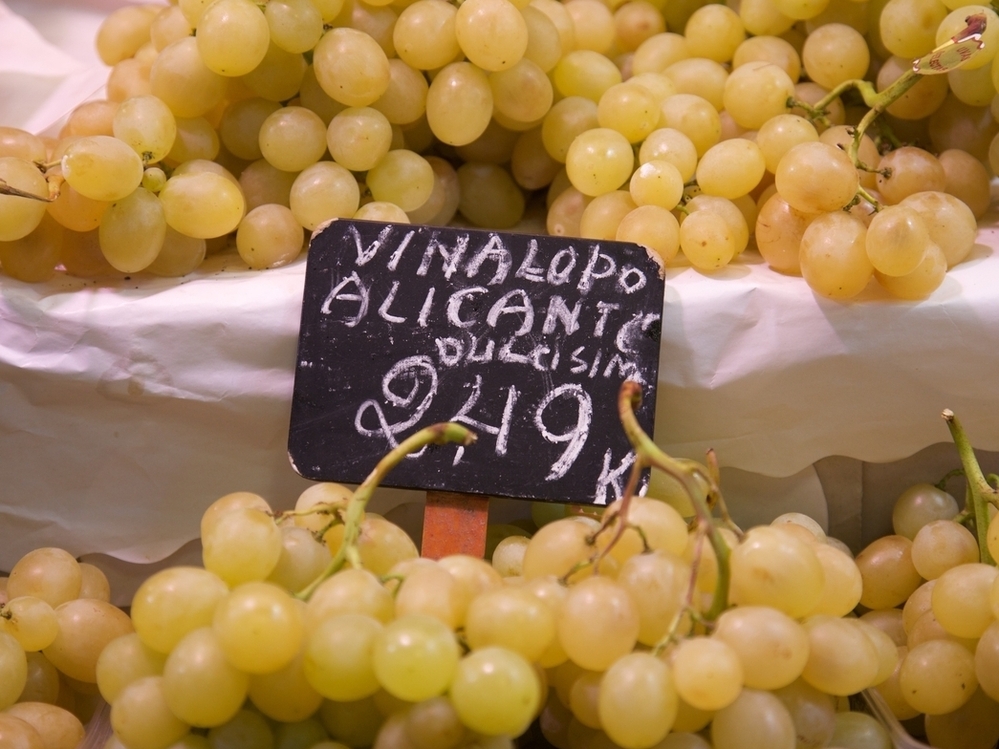
This popular tradition is a century or so old, though its exact origins remain debatable. One oft-repeated story says that growers in Alicante had a bumper 1909 harvest and found a creative way to sell off their surplus.

The traditional variety of grape consumed at the start of the new year is called Aledo. The grapes mature late are not harvested until November and December.

Jeff Koehler The traditional variety of grape consumed at the start of the new year is called Aledo. The grapes mature late are not harvested until November and December. The traditional variety of grape consumed at the start of the new year is called Aledo. The grapes mature late are not harvested until November and December.

Jeff Koehler

Recently, though, old newspaper articles have been republished that show the tradition began decades earlier, in the 1880s. These stories tell of bourgeoisie in Madrid copying the French tradition of having grapes and champagne on the last day of the year. Before long this custom had been adopted by certain madrileños who went to Puerta del Sol to see the bells chime at the turning of the year and, most likely in an ironic or mocking manner, to eat grapes like the upper class.

About 80 percent of the "lucky grapes" come from the valley of Vinalopó in central Alicante, on Spain's Mediterranean coast. Fleshy, deliciously sweet, and pale, almost whitish-green in color, they are a traditional Spanish variety called Aledo that, maturing late, are not harvested until November and December.

But these are no ordinary grapes. Protected by Denominación de Origen (designation of origin, or D.O.) status, budding clusters are wrapped in paper bags in June and July and kept covered as they ripen. This was first done in the late 19th century to protect them from a plague of cochylis vine moths. Growers found it also conserved the flavor, aroma and color of the grapes, and slowed their maturation.

According to the regulatory office for D.O., Uva de Mesa Embolsada Vinalopó, bagging the grapes also means that "they form a peel that's much finer by not having to fend off the aggressions of the rain, the sun or the wind."

When I went to Barcelona's iconic La Boqueria market to buy my grapes for this year's festivities, Maria, the seasoned stall owner of Frutas y Verduras E. Lafuente, told me that "having such a fine skin also makes them quicker to eat. There's less to swallow."

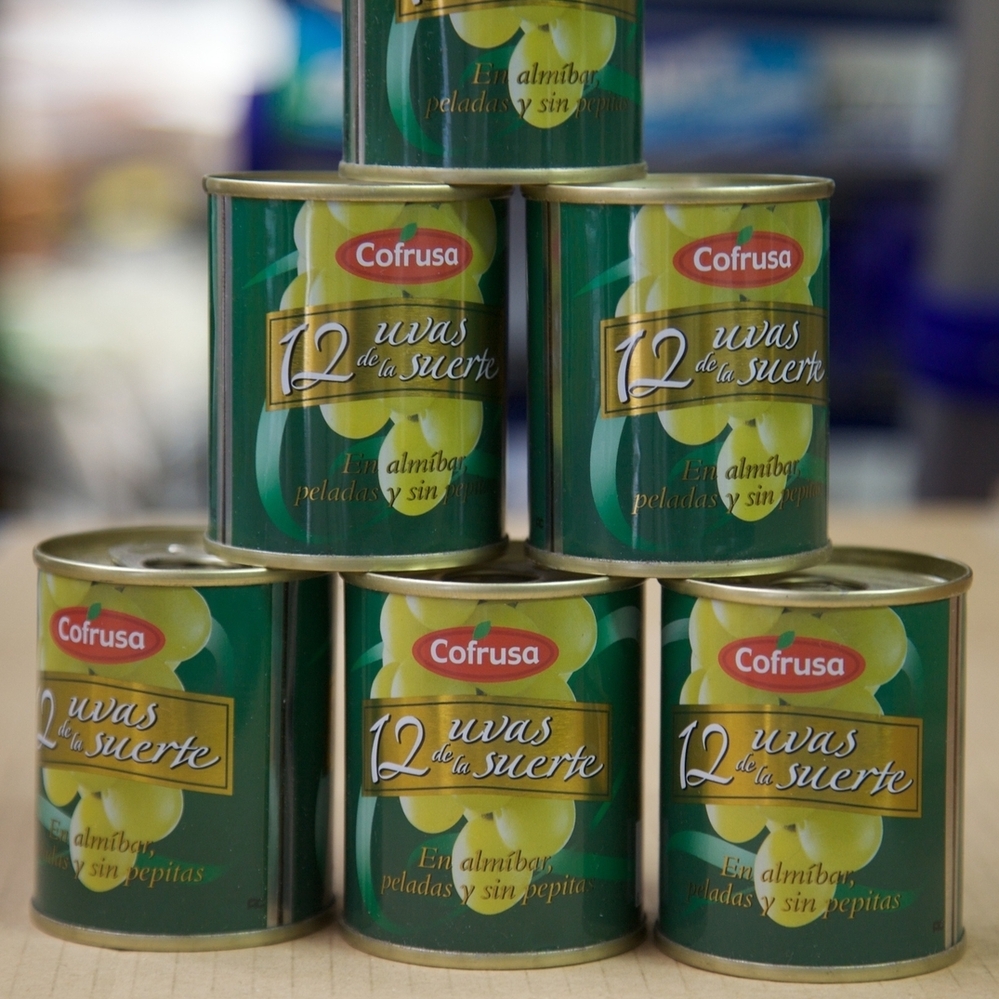
Supermarkets sell small tins of 12 seeded and peeled grapes.

Jeff Koehler Supermarkets sell small tins of 12 seeded and peeled grapes. Supermarkets sell small tins of 12 seeded and peeled grapes.

Jeff Koehler

And, with the bells impatiently tolling, that small detail makes a difference. It is no easy task eating grapes so quickly, especially when each has three or four seeds. (Seedless grapes are a rarity here, though some painstakingly remove the seeds beforehand. Ever more extreme — or modern — are the small tins of 12 seeded and peeled grapes now sold in supermarkets.) The only way to finish all 12 is to not chew, just take a solid bite and then swallow, pips and all.

Such a strategy is easier to plan than to execute, especially by grape number six or seven when, in my experience, the giggles kick in. After 15 years living in Spain, I have learned that the only way to finish all 12 is by concentrating on the chimes and ignoring the rest of the surrounding commotion.

If scoffing grapes at midnight isn't strange enough, convention says you must do so while wearing red ropa interior, or underwear — a bra, a sock, a garter, whatever. And — stranger yet — the undergarment should be given to you by someone else.

Maria, the stall owner, reminded me not to forget a third traditional lucky charm to accompany red underwear and grapes: drop a gold ring into my celebratory glass of cava (local champagne-style bubbly from Catalunya). "Just don't swallow it!" That would, no doubt, be a harbinger of bad luck.

When the 12 dongs finish and the last of the grapes has been swallowed, there are cheek kisses, toasts with glasses of cava, and pieces of turrón (almond and honey nougat from Alicante) passed around as the most expensive commercials of the year play on TV and phone lines jam with the crush of well-wishing calls.

In this year of acute economic hardship in Spain, many will hope that eating the grapes brings better luck in 2013, and try particularly hard to finish them all before the last chime fades to silence and the new year begins.

Jeff Koehler is the author of Morocco: A Culinary Journey With Recipes. His next cookbook, on Spain, will be published in 2013. Visit www.jeff-koehler.com or follow @koehlercooks.


View the original article here

Why Charities Need To Consider Donors' Politics

As American make contributions to various charities at the end of the year, there is increasing evidence that politics is playing a role in their decisions. Research suggests that the way the charity presses certain ideological buttons predicts whether liberals or conservatives will pony up a donation.

Copyright © 2012 National Public Radio. For personal, noncommercial use only. See Terms of Use. For other uses, prior permission required.

DAVID GREENE, HOST:

Many people of course gave to charities supporting people in Sandy's path. Some will give again today in order to claim a tax deduction before the end of the year. Different people, of course, give to different charities. And it turns out that you political beliefs could influence who gets your money.

STEVE INSKEEP, HOST:

NPR science correspondent Shankar Vedantam joins us regularly to talk about interesting social science research, including some research relating to this. Welcome back to the program.

SHANKAR VEDANTAM, BYLINE: Thanks, Steve.

INSKEEP: OK. So has politics affected charity, as well?

VEDANTAM: You know, if you'd asked me this question a week ago and you'd asked me my personal opinion, I would've said no. Charity has to be outside the bounds of these political identities. But I spoke with Karen Winterich - she's a researcher at Penn State - and she is finding that, in fact, different kinds of charitable appeals do appeal to liberals and to conservatives. And so what I did was I made up a fictitious group. I said let's imagine an organization called the Ocean County Volunteer Fire Department.

INSKEEP: I was hoping it was going to be the Shankar Vedanta Department.

(LAUGHTER)

INSKEEP: Go ahead. Go ahead. Anyway, come on. OK.

VEDANTAM: So I told her make up to pitches for donations, one of which is designed to appeal to liberals, and one of which is designed to appeal to conservatives.

INSKEEP: OK, for the Ocean County...

VEDANTAM: ...Volunteer Fire Department.

INSKEEP: All right.

VEDANTAM: And so, here's her first pitch for this fire department.

KAREN WINTERICH: Ocean County has had a long-standing tradition of families helping each other and the local community, pulling together in times of need, and we want to make sure that we're able to continue to do that so that we can support the community and protect everyone from the harm that a fire might incur. We'd ask that you support us in this cause.

INSKEEP: All right.

VEDANTAM: So that was one version of the appeal. And after I played the second version Steve, I'm going to ask you to guess which you think might appeal to the liberals and which would appeal to conservatives. Here she is again.

WINTERICH: Ocean County Fire Department has focused for years on protecting all families from harm in the event of fire. We are in need of additional support so we can continue to make sure that every family and every home is protected in the event of a fire or other disaster. We ask for your support in this cause.

VEDANTAM: OK. So Steve, what do you think?

INSKEEP: Well, it's easy for me because I've got a piece of paper that tells me which is which, I'm sorry to say.

(LAUGHTER)

INSKEEP: But they use very similar phrases. Why don't you just tell me here, because the first one talks about families helping each other, supporting the community. The other talks about every family and home being protected, Similar language, but not identical.

VEDANTAM: Right. So what Winterich is finding is that when a charitable organization focuses its language on what's of importance to the community and stresses values and traditions, that kind of message appeals more to conservatives. When the message is focused more on everyone has equal rights, every family deserves to be protected, that's a message that appeals more to liberals.

INSKEEP: Oh, here's the language. OK, Ocean County has had a long-standing tradition of families helping each other. That's the conservative pitch. And making sure every family and every home is protected in the event of a fire, that appeals - or is designed to appeal, anyway - a little more to liberals.

VEDANTAM: That's exactly what Winterich is saying. Some of this research Steve, is coming out of a broader push to basically understand how liberals and conservatives come to different policy positions and different ideological positions.

INSKEEP: Mm-hmm.

VEDANTAM: And what Winterich is finding is that both liberals and conservatives tend to value things that are of importance to the individual, protecting everyone's rights. Conservatives tend to have a stronger attitude than liberals when it comes to protecting communities, when it comes to valuing loyalty, when it comes to valuing values. And what she's finding is that when charities speak to those individual moral foundations you're much more likely to get liberals and conservatives to pony up some money.

INSKEEP: I assume there are charities that already understand this and are tailoring their pitches accordingly.

VEDANTAM: Well, I think most charities actually, are pitching their message in a way that would primarily appeal to liberal donors - at least that's what Winterich is finding. So she looks at this charity, for example, called Rebuilding Together, it's a charity that functions very much like Habitat for Humanity.

INSKEEP: Building houses for poor people.

VEDANTAM: Exactly. And what Winterich did is she conducted an experiment where she gave some people the message that rebuilding together is focused on helping individuals. But she gave other people the message that says, when we rebuild homes when we rebuild homes for people it pulls communities together, it solidifies our values, it helps our traditions. And what she finds is when she gets that message, conservatives are much more likely to back a charity like this.

INSKEEP: Shankar, thanks very much.

VEDANTAM: Thanks, Steve.

INSKEEP: That's NPR's science correspondent Shankar Vedantam. You can follow him on Twitter @HiddenBrain. You can also follow this program @MORNINGEDITION and @nprinskeep.

(SOUNDBITE OF MUSIC)

INSKEEP: It's MORNING EDITION from NPR News.

Copyright © 2012 National Public Radio. All rights reserved. No quotes from the materials contained herein may be used in any media without attribution to National Public Radio. This transcript is provided for personal, noncommercial use only, pursuant to our Terms of Use. Any other use requires NPR's prior permission. Visit our permissions page for further information.

NPR transcripts are created on a rush deadline by a contractor for NPR, and accuracy and availability may vary. This text may not be in its final form and may be updated or revised in the future. Please be aware that the authoritative record of NPR's programming is the audio.


View the original article here

'A Thousand Mornings' With Poet Mary Oliver

A Thousand Mornings

Mary Oliver is a Pulitzer Prize-winning poet whose body of work is largely filled with imagery of the natural world — cats, opossums crossing the street, sunflowers and black oaks in the sunshine. Her most recent collection is entitled A Thousand Mornings.

In one poem, "I Happen to Be Standing," Oliver describes herself as witnessing all these things as she stands by her door every morning, notebook and pen in hand. But, she tells NPR's Rachel Martin, she doesn't actually do that every morning. "Almost. I thought, gee, I do lie a little bit, and I should have said, 'which is the way I begin most mornings,' " she laughs.

Mornings with the notebook are part of a regular ritual for Oliver, though. "Most mornings I'm up to see the sun, and that rising of the light moves me very much, and I'm used to thinking and feeling in words, so it sort of just happens."

Those morning moments are a kind of prayer for Oliver. "I think one thing is that prayer has become more useful, interesting, fruitful, and ... almost involuntary in my life," she says. "And when I talk about prayer, I mean really ... what Rumi says in that wonderful line, 'there are hundreds of ways to kneel and kiss the ground.' I'm not theological, specifically, I might pick a flower for Shiva as well as say the hundredth [psalm]."

Oliver says her work has become more spiritual over the years, growing from her love of the poets who came before her and the natural world — but she feels a great sorrow over humanity's lack of care for that world. "The woods that I loved as a child are entirely gone. The woods that I loved as a young adult are gone. The woods that most recently I walked in are not gone, but they're full of bicycle trails," she says.

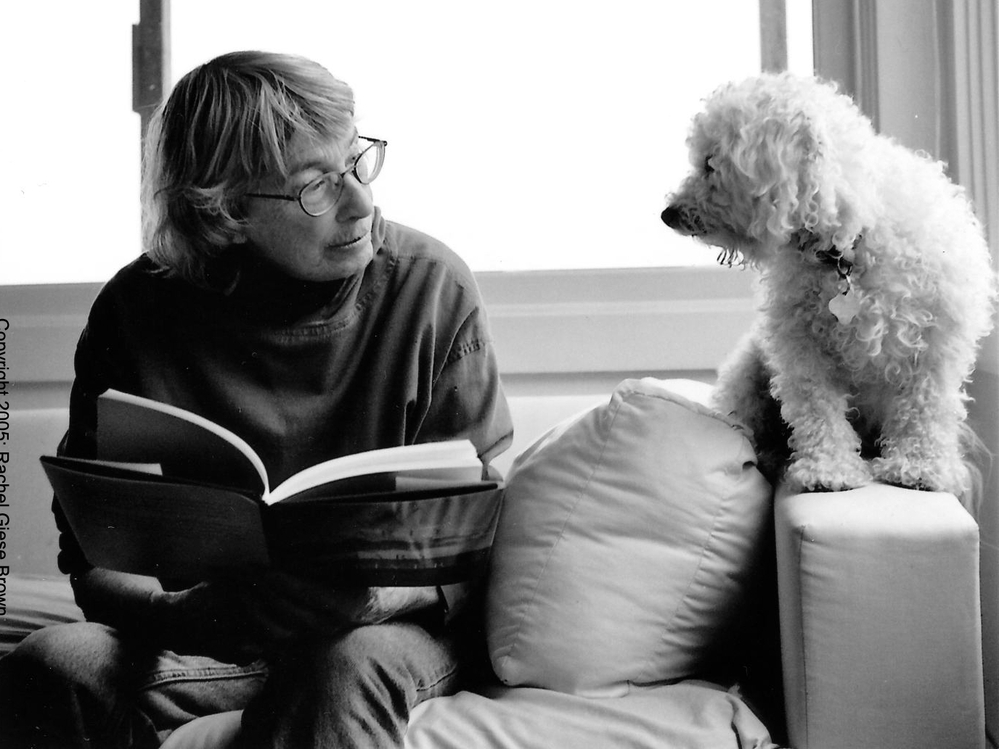
Mary Oliver has won a Pulitzer Prize and the National Book Award.

Rachel Giese Brown Mary Oliver has won a Pulitzer Prize and the National Book Award. Mary Oliver has won a Pulitzer Prize and the National Book Award.

Rachel Giese Brown

"And this is happening to the world," Oliver continues, "and I think it is very very dangerous for our future generations, those of us who believe that the world is not only necessary to us in its pristine state, but it is in itself an act of some kind of spiritual thing. I said once, and I think this is true, the world did not have to be beautiful to work. But it is. What does that mean?"

It can be a challenge, over years of writing about the natural world, to find new ways of describing what's out there — especially when so many other poets are writing about the same subject matter. But Oliver says she's up to the challenge. "To find a new word that is accurate and different, you have to be alert for it," she says. "But it's wonderful, it's fun."

"One thing I do know is that poetry, to be understood, must be clear," Oliver adds. "It mustn't be fancy. I have the feeling that a lot of poets writing now are, they sort of tap dance through it. I always feel that whatever isn't necessary shouldn't be in a poem."

A THOUSAND MORNINGS

All night my heart makes its way
however it can over the rough ground
of uncertainties, but only until night
meets and then is overwhelmed by
morning, the light deepening, the
wind easing and just waiting, as I
too wait (and when have I ever been
disappointed?) for redbird to sing.

THE FIRST TIME PERCY CAME BACK

The first time Percy came back
he was not sailing on a cloud.
He was loping along the sand as though
he had come a great way.
"Percy," I cried out, and reached to him—
those white curls—
but he was unreachable. As music
is present yet you can't touch it.
"Yes, it's all different," he said.
"You're going to be very surprised."
But I wasn't thinking of that. I only
wanted to hold him. "Listen," he said,
"I miss that too.
And now you'll be telling stories
of my coming back
and they won't be false, and they won't be true,
but they'll be real."
And then, as he used to, he said, "Let's go!"
And we walked down the beach together.

IN OUR WOODS,
SOMETIMES A RARE MUSIC

Every spring
I hear the thrush singing
in the glowing woods
he is only passing through.
His voice is deep,
then he lifts it until it seems
to fall from the sky.
I am thrilled.
I am grateful.
Then, by the end of morning,
he's gone, nothing but silence
out of the tree
where he rested for a night.
And this I find acceptable.
Not enough is a poor life.
But too much is, well, too much.
Imagine Verdi or Mahler
every day, all day.
It would exhaust anyone.

From A Thousand Mornings by Mary Oliver. Copyright 2012 by Mary Oliver. Excerpted with permission of Penguin Group.


View the original article here

Fiscal Cliff Debate: Why The (Very) Few Rule The Many In Congress

In the final hours of the latest budget crisis in Washington, several salient facts are increasingly clear.

First, the leaders of the two parties in the Senate might still put together a negotiated deal that would avert the combination of tax increases and spending cuts known as the fiscal cliff. The leaders would start with President Obama's top priorities, modify them to accommodate Republican preferences, throw in some measures that are GOP priorities and take the package to the floor.

Second, that package would pass the Senate on Monday on the votes of Democrats, independents and possibly even a Republican or two. That assumes no one filibusters the bill. Even one senator could do so and delay the proceedings into the new year. (More about that rule in a moment.)

Third, if no one filibusters and the Senate approves the compromise package, the House will have enough votes to approve it and send it on for the president's signature. But having enough votes is not enough. In fact, it is likely the package will not even be brought to the floor for debate and a vote.

How can this be?

Even if a majority of the whole House (Republicans and Democrats) were prepared to swallow the Senate deal, they won't get a chance unless Speaker John Boehner brings it to the floor. And Boehner probably won't. He has adopted a rule that no measure will be voted on unless it is supported by a majority of the majority party — that is, his party, the Republicans. At this point, the Senate deal looks unlikely to appeal to most House Republicans.

Many House Republicans refused to vote for higher taxes even on income over $1 million when Boehner gave them the chance back on Dec. 20. Now, any package emerging from the Senate will start the higher taxes on an income amount much closer to the president's preferred $250,000 threshold.

On Dec. 20, Boehner withdrew his "Plan B" proposal because he did not have enough Republicans to pass it on their votes alone. This time around, he might get enough Democratic votes for the Senate deal to supplement some number of Republican votes and achieve a majority of the whole House. That would get the job done, send the package to the president for enactment and avert the cliff.

But Boehner has said he doesn't want the House to pass legislation on the strength of Democratic votes. He wants it to be acceptable to his own party first.

Two points here, in fairness to Boehner. First, if he were to defy the "majority of the majority" rule, he might well have trouble being re-elected when the House formally chooses its next speaker on Thursday. While he has no declared intraparty challenger, enough defections in the actual floor voting could leave him short of the majority needed to make him speaker. That could lead to a chaotic situation in which his future would be uncertain.

Second, the "majority of the majority" rule was not his idea. It dates to the previous Republican speaker, Denny Hastert, who got the big gavel late in 1998 (after the fall of former Speaker Newt Gingrich and after other candidates for the job withdrew).

Hastert, from the outer exurbs of Chicago, was an old-school Midwestern Republican and not one of the hard right conservatives who had enabled the GOP to take over the House in 1994. So he adopted the "majority of the majority" rule to reassure this wing that he would not force compromises on them by making deals with the minority Democrats.

Boehner, from southwestern Ohio, is also of the more traditional Main Street Republican ilk and the furthest thing from an ideologue. He was elevated to his current office in the absence of a single popular challenger after his party seized the House majority in 2010. He has never been the darling of the 2010 freshmen or of the Tea Party activists who fueled that takeover election. Like Hastert, he relies on the "majority of the majority" rule to reassure the most conservative element within his chamber's rank and file.

The Tea Party has fallen on lean times lately, losing some of its leading lights in Congress and once again bearing the blame for lost opportunities in the Senate. But it still bulks large in the House Republican conference, where its numbers were sufficient to stop Boehner's Plan B on Dec. 20. This caucus within the caucus will make it difficult for Boehner to bring to the floor any Senate deal that raises taxes on the wealthy, not to mention any deal that has Obama's blessing.

Some believe Boehner is playing for time in these, the waning days of the 112th Congress. After the new, 113th Congress is sworn in Thursday and after he has been re-elected speaker (presumably), he might have more leverage in dealing with his own troops. That remains to be seen.

Before leaving this discussion, we should return for one moment to the Senate. If that chamber sends over a compromise to avoid the cliff, it will mean all 100 senators have agreed not to filibuster it. Under normal circumstances — or what has become normal in recent years — anything this important would surely be filibustered.

So if it seems odd to see a minority of the House bossing the speaker there, it is surely hard for most Americans to understand why it takes 60 votes to shut off a filibuster (real or threatened) and vote on any meaningful bill in the Senate.

In this immediate instance, if no one filibusters, it might be because the entire Senate feels the urgency of the midnight Monday deadline on tax rates and federal spending. But it is more likely that the entire Senate feels confident a filibuster is unnecessary — given the sure resistance the package will meet in the House.

Why risk the wrath of all those who will feel post-cliff pain when the other chamber of Congress is so ready to do it for you?


View the original article here

2013: A Tipping Year For Climate Change?

Cracks form in the bed of a dried lake in Waterloo, Neb. The drought withered crops and dried out lakes across the nation's midsection in 2012.

Nati Harnik/AP Cracks form in the bed of a dried lake in Waterloo, Neb. The drought withered crops and dried out lakes across the nation's midsection in 2012. Cracks form in the bed of a dried lake in Waterloo, Neb. The drought withered crops and dried out lakes across the nation's midsection in 2012.

Nati Harnik/AP

This year's extreme weather was one for the record books; 2012 is slated to be the hottest summer on record.

The worst drought in 50 years struck the South and Midwest, devastating the U.S. agriculture industry. Deadly floods and superstorms paralyzed the northeast and other parts of the country.

While the public is in shock by extreme weather events that have taken place, environmentalist Bill McKibben and other members of the science community say it is a result of climate change.

"We've already passed all kinds of tipping points," McKibben, the founder of 350.org, tells weekends on All Things Considered host Jacki Lyden. "The NASA scientist Jim Hansen was saying, 'There's no other word for where we are now than planetary emergency.'"

Next month, President Obama will be sworn in for a second term, and McKibben is curious about whether the president will take a different approach to the growing problem.

On how President Obama can demonstrate his seriousness

"I think the first tell that we're going to get of whether the second term will be different will be the president's decision on this Keystone Pipeline — the huge pipeline to the tar sands of Canada. It's the one thing that's really united the environmental movement and brought people out into the streets. The president will make a decision on it [at] some point in the first half of the year
and if he stands up to the fossil fuel industry for once, it will be, I think, a sign that he may be ready to take climate change with at least a little bit of the seriousness it deserves."

On the biggest environmental issues in 2013

"In this country one of the big questions will be whether we luck out and are able to see some break in this drought or whether it stretches on for another year. Already the Mississippi, which just 18 months ago was in record flood, is now flirting with the lowest water ever measured there.

"Food prices were up 40 and 45 percent around the world because the harvest failed in North America. The world is at a point [where] last year it grew less food than it consumed. We can't keep on with this kind of erratic weather and not pay huge consequence."

On how Germany is leading the way in climate change initiatives

"The clear alternative and the best news from 2012 came from Germany, the one big country that's taken climate change seriously. Their energy minister announced in November that they were going to blow past their targets for renewable power. This is in Germany, mind you. I mean, Munich is north of Montreal, but there were days last summer when they generated more than half the power they used from solar panels within their borders. What they're proving is it's not natural bounty nor technological know-how that holds us back; it's simply political will, one resource we're capable of ginning up if we set our minds to it."


View the original article here

Close Out The Year With Some Best-Selling Last Words

A stack of books. iStockphoto.com

People often make lists of the greatest opening lines in fiction, but closing lines really appeal to me. They're your final moments with a book and can help you remember and treasure it forever.

The last weekend of the year seems an appropriate time to consider the final words of our favorite novels and short stories. Here are some that I'm especially fond of:

NPR librarian Kee Malesky has been dubbed "the source of all human knowledge" by NPR's Scott Simon. The author of the books All Facts Considered and Learn Something New Every Day: 365 Facts to Fulfill Your Life, she shares her adventures from the reference desk in this series called Kee Facts.

The Great Gatsby
F. Scott Fitzgerald
"So we beat on, boats against the current, borne back ceaselessly into the past."

Middlemarch
George Eliot
"But the effect of her being on those around her was incalculably diffusive, for the growing good of the world is partly dependent on unhistoric acts, and that things are not so ill with you and me as they might have been is half owing to the number who lived faithfully a hidden life and rest in unvisited tombs."

Still Life With Woodpecker
Tom Robbins
"But I can and will remind you of two of the most important facts I know: (1) Everything is part of it. (2) It's never too late to have a happy childhood."

The Good Earth
Pearl Buck
"'Rest assured, our father, rest assured. The land is not to be sold.' But over the old man's head they looked at each other and smiled."

The Dharma Bums
Jack Kerouac
"Then I added 'Blah,' with a little grin, because I knew that shack and that mountain would understand what that meant, and turned and went on down the trail back to this world."

Angela's Ashes
Frank McCourt
"I stand on the deck with the Wireless Officer looking at the lights of America twinkling. He says, 'My God, that was a lovely night, Frank. Isn't this a great country altogether?' 'Tis.'"

The Haunting of Hill House
Shirley Jackson
"Within, walls continued upright, bricks met neatly, floors were firm, and doors were sensibly shut; silence lay steadily against the wood and stone of Hill House, and whatever walked there, walked alone."

The Dead
James Joyce
"His soul swooned slowly as he heard the snow falling faintly through the universe and faintly falling, like the descent of their last end, upon all the living and the dead."

The Silence of the Lambs
Thomas Harris
"But the face on the pillow, rosy in the firelight, is certainly that of Clarice Starling, and she sleeps deeply, sweetly, in the silence of the lambs."

The World According to Garp
John Irving
"In the world according to her father, Jenny Garp knew, we must have energy. Her famous grandmother, Jenny Fields, once thought of us as Externals, Vital Organs, Absentees, and Goners. But in the world according to Garp, we are all terminal cases." (Note: John Irving has told interviewers that he always writes the last lines of his novels first.)

What last lines would you share from your favorite books? Please add yours to the comments section below.


View the original article here

Episode 425: An FBI Hostage Negotiator Buys A Car

Cars Bloomberg via Getty Images

The fiscal cliff, for all its grand theater, really comes down to people in a room trying to come to an agreement. People doing whatever it takes to get what they want from the other side.

On today's show, three professional negotiators walk us through techniques that members of Congress may be using right now. They explain these techniques not with textbooks, but with examples from their everyday lives.

Download the Planet Money iPhone App. Music: Poliça's "Lay Your Cards Out." Find us: Twitter/ Facebook/ Spotify/ Tumblr.


View the original article here

Massachusetts Freshman Brings Kennedys Back To Capitol Hill

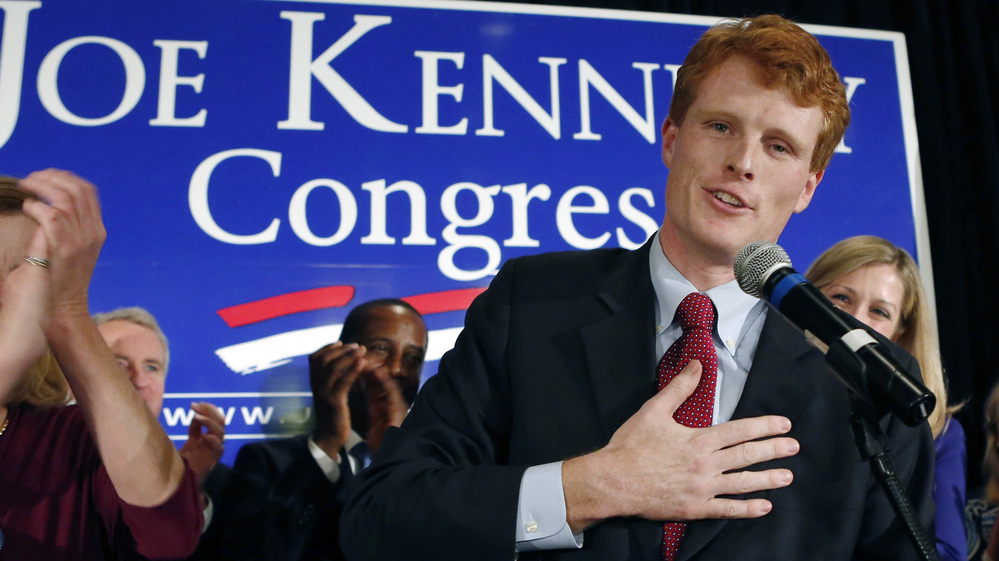
Joseph Kennedy III, son of former Rep. Joseph Kennedy II and grandson of the late Robert F. Kennedy, delivers his victory speech on Nov. 6 in Newton, Mass.

Bizuayehu Tesfaye/AP Joseph Kennedy III, son of former Rep. Joseph Kennedy II and grandson of the late Robert F. Kennedy, delivers his victory speech on Nov. 6 in Newton, Mass. Joseph Kennedy III, son of former Rep. Joseph Kennedy II and grandson of the late Robert F. Kennedy, delivers his victory speech on Nov. 6 in Newton, Mass.

Bizuayehu Tesfaye/AP

Last year marked the first time in more than six decades that there was no Kennedy in elected office in the nation's capital.

But that gap ends this week with the inauguration of Rep.-elect Joseph Kennedy III of Massachusetts. The son of former Rep. Joe Kennedy and the grandson of the late Robert F. Kennedy was elected by a 2-1 margin in his first run for office.

There's little denying that Kennedy's election was about more than just him.

At a recent orientation for newly elected members of Congress at Harvard University, there were plenty of folks hoping to make a name for themselves — and then there was Kennedy.

"Oh! I know who you are!" said a woman meeting the new congressman. "You look so much like, obviously, your granddad, but also Ted Kennedy."

That kind of recognition was frustrating for Sean Bielat, the Republican trounced by Kennedy.

"I definitely saw that ... how people reacted to the fact that they were talking to a Kennedy," Bielat says.

He says the 32-year-old Kennedy got by with little scrutiny and remains a bit of an unknown.

"The case here is what you see is what you want to see," Bielat says. "And for many people, it's the continuation of Camelot, it's the continuation of the Kennedy legacy and legend."

On The Campaign Trail

For his part, Kennedy — a tall redhead with a chiseled jaw and freckles — seems to take it all in stride. He says running for political office was not a lifelong goal, but dawned on him while he was working as an assistant prosecutor.

"You'd spend a couple days on trial and, win or lose, you'd come back to your desk and you'd find 10 more of the cases that you just tried," he says. "At a certain point you say, if I'm really trying to solve this problem, we have to address some of these issues about why these cases are starting in the first place."

That coincided with a rare open congressional seat, and Kennedy jumped in. While many observers took a Kennedy win for granted, the candidate ran like an underdog, shaking hands at train stations and mastering the local nitty-gritty.

"He knew all the individual projects that we had worked on in Attleboro," says Rep. Jim McGovern, who's assigned to mentor the freshman congressman. "He did his homework, you know. He's got a great name, but he got elected because of the way he ran his campaign."

McGovern says Kennedy doesn't really need a mentor. "I think very much in the tradition of his father and his grandfather and his uncles, I think he will make an incredible mark on Congress."

School Days

Kennedy says his priorities will be reducing the debt and deficit, boosting the economy, and immigration reform. Those who know him expect him to be more of a workhorse than a showhorse.

"He was never about his name at all," says Rob Leith, Kennedy's high school English teacher. He says Kennedy was always charismatic, and that both he and his twin brother, Matt, were well-behaved and smart.

"I know that a lot of the more famous Kennedys are known for their academic and personal difficulties going through adolescence," Leith says. "Joe was not a wild child whatsoever. I would say he's pretty squeaky clean."

Harvard Law School professor Alan Dershowitz tells a similar story of the eager redhead he had in his front row: "Students all had their names in front of them, and he just had 'Joe.' I had no idea he was a member of the Kennedy family and I just kept calling him Joe."

Dershowitz figured it out months later, when Kennedy came to his office for career advice.

He was a good student, Dershowitz says, not intimidated even by the Socratic method.

"One of the women sitting in that class mocked him at one point for volunteering to answer a very difficult serious of questions I was asking," he recalls. "She razzed him and she's now his wife."

'Let Me Do My Job'

Kennedy is known for his discipline and sticking to the script. His former boss, Middlesex District Attorney Gerry Leone, recalls one rare occasion when Kennedy let his guard down as he was dogged by a reporter on his way into court.

"He was hustling around [and] for just that one moment lost the discipline with the media and he said, 'Dude, I'm just trying to do my job.' And, you know, that's Joe — dude, just let me do my job."

Kennedy says he knows all the attention is a double-edged sword. But he says he's not going to Washington just to lie low.

The country needs leadership, he says. But he adds that, as a freshman, he knows he has a lot to learn.


View the original article here

Sunday, 30 December 2012

Shake It Up! Vintage Cocktails Are Ripe For Revival

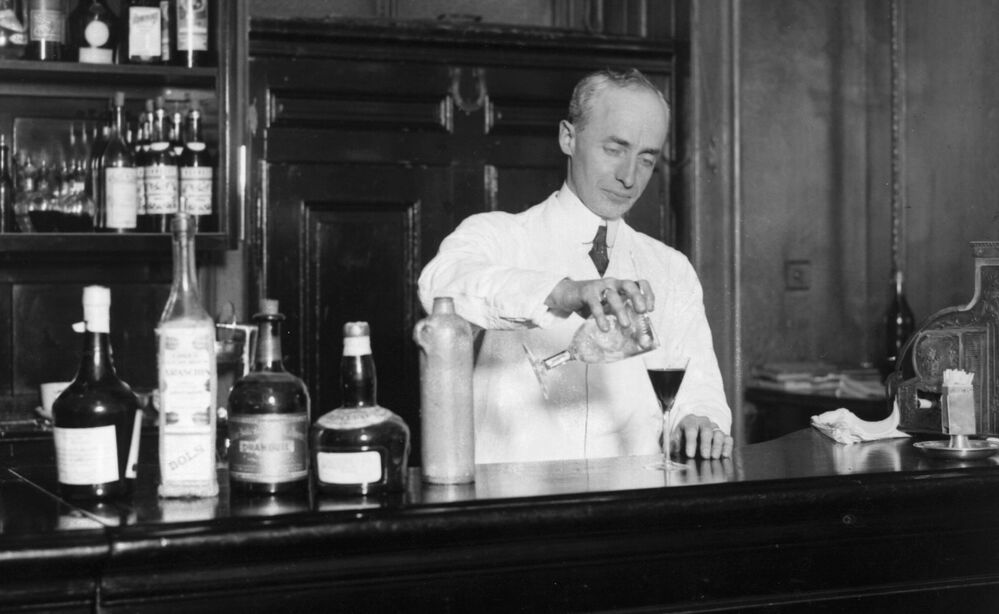
American bartender Harry Craddock mixes a drink at the Savoy Hotel in London in 1926. Craddock is known for helping to popularize the Corpse Reviver, one of the drinks featured in historian Lesley Blume's book about vintage cocktail culture.

Topical Press Agency/Getty Images American bartender Harry Craddock mixes a drink at the Savoy Hotel in London in 1926. Craddock is known for helping to popularize the Corpse Reviver, one of the drinks featured in historian Lesley Blume's book about vintage cocktail culture. American bartender Harry Craddock mixes a drink at the Savoy Hotel in London in 1926. Craddock is known for helping to popularize the Corpse Reviver, one of the drinks featured in historian Lesley Blume's book about vintage cocktail culture.

Topical Press Agency/Getty Images Let's Bring Back

A Compendium Of Impish, Romantic, Amusing, And Occasionally Appalling Potations From Bygone Eras

by Lesley M. M. Blume and Grady McFerrin

Hardcover, 207 pages | purchase

close Let's Bring Back: The Cocktail EditionA Compendium Of Impish, Romantic, Amusing, And Occasionally Appalling Potations From Bygone ErasLesley M. M. Blume and Grady McFerrin

It's the holiday season and for some people that means celebrating with friends, family and cocktails. But instead of settling for the standard martini or Manhattan, author and historian Lesley Blume suggests you reach for a taste of bygone cocktail culture.

In Let's Bring Back: The Cocktail Edition, Blume outlines more than 100 lesser-known oldies that are both delicious and delightful. She joins NPR's David Greene to discuss cocktail history and how to make vintage recipes part of a modern-day party.

On the impishness and occasional gravitas of bygone cocktail culture

"One of the things I uncovered was how mischievous and amusing a lot of cocktail history was. And I feel like a lot of contemporary cocktail culture has gotten a bit self-serious, and one of the things that resonated with me was how unself-serious cocktail culture was in bygone eras. So I would say 99 percent of the cocktails that we selected for this book really are impish and outrageous, and they're portals into social history from times gone by.

"... Some bartenders were famous for a particular kind of gravitas, like the original father of mixology who was known as Professor Jerry Thomas, although ... it's never been confirmed that he held any kind of advanced degree. He was a serious bartender in the age of whiskey slingers and the 1800s in San Francisco. And he had a starched white shirt with diamond cuff links and a silver bar set which he toured in Europe with. And he really elevated the art of mixology. But, you know, for the most part I'm finding that a lot of bartenders from times gone by, they were determined to create really delicious drinks, but there was a culture of hilarity that surrounded drink making in bygone eras and I really wanted to celebrate that in this book."

Part of Blume's "Inseparable Combination" chapter, this drink pairs well with the Godfather Cocktail.

1 ounce vodka
1 ounce amaretto
Ice cubes

Stir with ice, strain into a chilled cocktail glass, and serve with list of wishes to be granted.

On Ernest Hemingway's contribution to cocktail culture

"[Death in the Afternoon] was supposedly a Hemingway invention which he named after his famous book about bullfighting. And in a recipe drafted by the famous author, he instructs readers to 'Pour one jigger of absinthe into a Champagne glass. Add iced Champagne until it attains the proper opalescent milkiness.' And then he adds, 'Drink three to five of these slowly.' So you can see why these drinks were called Death in the Afternoon; I mean, three to five of these drinks would likely do most of us modern drinkers in."

On picking the right vintage cocktail for your next party

"There are a couple different ways to go about it. So, perhaps you pick a theme. So like for Halloween, for example, maybe you pick the Corpse Reviver or the Zombie Punch. Or maybe you tailor the drink to the guest of honor ... in an amusing way. So let's say you're throwing a bridal shower, why not serve the Demure Maiden's Blush cocktail? And then, you know, for the holidays, I love the idea of reviving the Gin Fizz. A very basic version of the Gin Fizz contains gin, simple syrup (which is sugar water), lemon juice and egg white. You shake it with ice and then you pour it into a champagne coupe or a cocktail glass, and you top it off with seltzer. It's really effervescent and velvety. Except for the holidays I recommend that you top it off with champagne instead of seltzer, and then that officially changes the category of Gin Fizz to a Diamond Fizz. And you know, what could be more glamorous or celebratory than a Diamond Fizz?"

On how to present a vintage cocktail

Lesley M. M. Blume is an author, journalist and cultural observer based in New York City. Her work has appeared in Vogue, Vanity Fair and Slate.

Chronicle Books Lesley M. M. Blume is an author, journalist and cultural observer based in New York City. Her work has appeared in Vogue, Vanity Fair and Slate. Lesley M. M. Blume is an author, journalist and cultural observer based in New York City. Her work has appeared in Vogue, Vanity Fair and Slate.

Chronicle Books

"I'm looking at everything through sort of a vintage prism, so one of the things I really love about vintage cocktail culture was that there was often an element of high presentation involved. Like, vintage barware and glassware often got so creative and so delightful. You can find it really easily at garage sales or eBay today. It's really fun to serve vintage cocktails in vintage glassware. And you know, back in the day there was a great fanfare involved with serving cocktails. You know, so for me the old-fashioned champagne tower, for instance, makes that point really nicely.

"... Popular in the 1920s, these towers were basically a pyramid of champagne coupe glasses — you know, the round glasses as opposed to the flutes — and champagne was poured into the top glass and it trickled down into all the glasses below. So instead of being handed a common old flute of champagne by a sullen waiter when you walk into the room, you got to prance up to this tower and you pluck a coupe of champagne off of this golden, glimmering affair."


View the original article here

Conservatives Invoke NAACP Case In Fight For Secret Donors

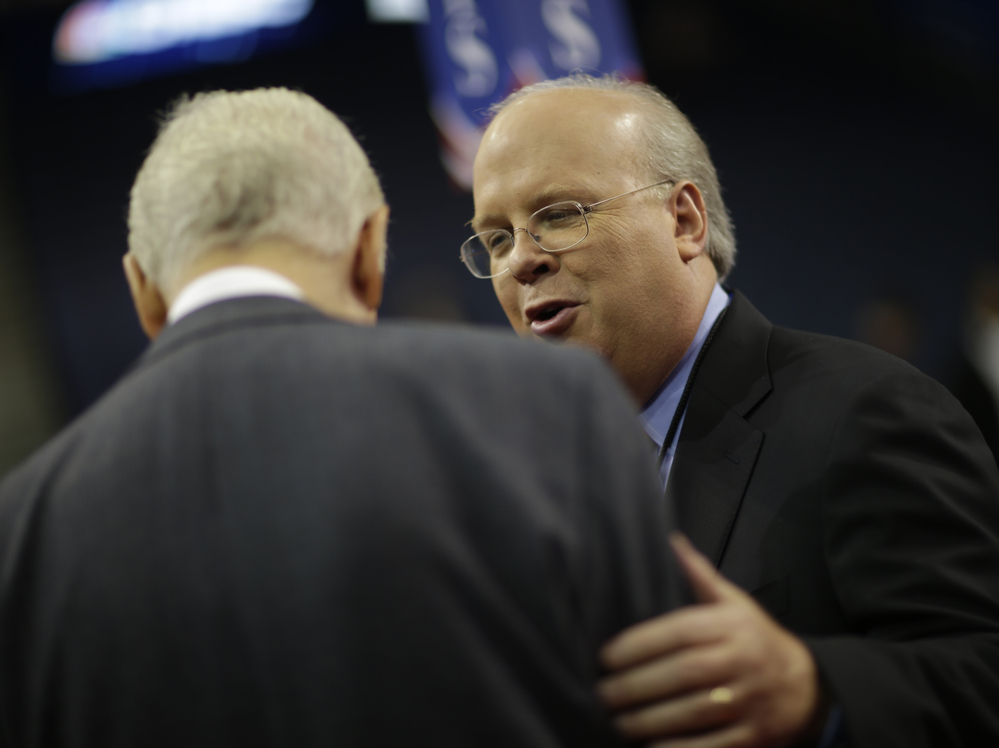
Republican strategist Karl Rove, shown at the Republican National Convention in August, is arguing for continued secrecy for the new class of million-dollar political donors.

David Goldman/AP Republican strategist Karl Rove, shown at the Republican National Convention in August, is arguing for continued secrecy for the new class of million-dollar political donors. Republican strategist Karl Rove, shown at the Republican National Convention in August, is arguing for continued secrecy for the new class of million-dollar political donors.

David Goldman/AP

Here's a question: What do Republican uber-strategist Karl Rove and civil rights icon Rosa Parks have in common?

The answer: A landmark Supreme Court ruling from 1958 protecting the First Amendment rights of dissident groups.

The case is rooted in the Montgomery bus boycott initiated by Parks in 1955. And it's likely to loom large in 2013 as Rove and other conservatives demand continued secrecy for the new class of million-dollar political donors.

A Wave Of Secret Money

This election year, secret money played a bigger role than in any other presidential campaign since Richard Nixon's. The nonpartisan Sunlight Foundation says that secretly funded groups spent well over $200 million. And four-fifths of it helped Republicans.

So it's not surprising that conservatives want to keep donors' identities secret. They say it's essential to safeguard donors from harassment and intimidation.

Senate Republican leader Mitch McConnell once favored sweeping transparency for political money. Not anymore.

In a major speech this year, he brought up the plight of a million-dollar donor to a superPAC supporting Republican presidential candidate Mitt Romney.

"People were digging through his divorce records, cable television hosts were going after him on the air, and bloggers were harassing his kids," McConnell said.

'Intimidation And Harassment'

Rove's group Crossroads GPS was a leader in the secret fundraising. He says that the disclosure advocates have a hidden agenda.

"They want to intimidate people into not giving to ... these conservative efforts," he said on Fox News.

And here is where Rove and Parks cross paths: In defending secret money, Rove invokes that Supreme Court case, NAACP v. Alabama. He lines up Crossroads GPS on the same side as Parks and the NAACP, and he says the transparency advocates make the same argument as the segregationists.

"I think it's shameful," Rove said. "I think it's a sign of their fear of democracy. And it's interesting that they have antecedents, and the antecedents are a bunch of segregationist attorney generals trying to shut down the NAACP."

To elaborate on this argument, aides to Rove recommended Heritage Foundation legal fellow Hans von Spakovsky.

"You look at the kind of intimidation and harassment that has occurred in the past year or two towards conservative political donors, and it makes you realize that the Supreme Court got it right," von Spakovsky says.

A 'False Symmetry'?

But the question is whether the two situations are similar.

A few months after the bus boycott began, Parks told Pacifica Radio how she had refused to give up her seat on the bus: "The time had just come when I had been pushed as far as I could stand to be pushed, I suppose," she said. "They placed me under arrest."

That was just the beginning. Montgomery law enforcement brought charges against Martin Luther King Jr. and other leaders. Arsonists firebombed their homes and churches. Across the state, rioters blocked an NAACP bid to desegregate the University of Alabama. A mob chased the one African-American student, chanting "Let's kill her."

The university acted. It suspended the black student — and then expelled her.

Meanwhile, state Attorney General John Patterson subpoenaed the NAACP's membership records. "The NAACP is the biggest enemy that the people of this state have," he said.

When the case finally reached the Supreme Court, the justices ruled in favor of the NAACP. They said the group faced attacks — both from government officials and from law-breakers — and that revealing its members would endanger their First Amendment rights.

"One of the reasons why the NAACP required special protections at that time [is] they were a minority group that law enforcement couldn't or wouldn't protect," says Dale Ho, a lawyer at the NAACP Legal Defense Fund.

He says conservatives are creating a "false symmetry" between those civil rights activists and today's millionaire donors. "In none of these recent cases that I'm aware of in the past five years has anyone ever alleged that law enforcement couldn't protect them adequately," Ho says.

A Right To Secrecy?

At the University of Chicago Law School, constitutional scholar Geoffrey Stone scoffs at the conservative argument, calling its proponents "a bunch of overly sensitive, thin-skinned billionaires who want to be able to have profound influence on the political process without being in any way accountable."

In the years since the NAACP v. Alabama decision, courts have never extended it to cover donors in the usual conservative-liberal, Republican-Democratic debates.

A related case did go to the Supreme Court in 2010. Challenging a state disclosure law, it sought to withhold the names of people who had petitioned against gay marriage.

The court said they had no right to secrecy. Justice Antonin Scalia was scathing: "Running a democracy takes a certain amount of civic courage. And the First Amendment does not protect you from criticism, or even nasty phone calls."

But von Spakovsky says that politically generous billionaires today need protection, just like civil rights workers 60 years ago.

"I don't think that a constitutional right like freedom of association should depend on how much money you have," he says.

It's an argument that seems sure to stir passionate debate this coming year as the disclosure battles take shape in Congress and the courts.


View the original article here

On Your Plate In 2013, Expect Kimchi And Good-For-You Greens

Commentator Bonny Wolf expects Asian cuisine like kimchi fried rice to become even more popular in 2013.

iStockphoto.com Commentator Bonny Wolf expects Asian cuisine like kimchi fried rice to become even more popular in 2013. Commentator Bonny Wolf expects Asian cuisine like kimchi fried rice to become even more popular in 2013.

iStockphoto.com

Weekend Edition food commentator Bonny Wolf offers her predictions of what we'll eat in the new year.

Asia is the new Europe. It's been gradual: from pan-Asian, Asian fusion and Asian-inspired to just deciding among Vietnamese, Korean, Tibetan and Burmese for dinner.

Should we have the simple food of the Thai plateau or the hot, salty, sour foods of southern Thailand?

The new flavors of the year won't come from the kitchens of chefs trained at Le Cordon Bleu. More likely, they'll trickle up from Asian street foods. Chipotle has opened ShopHouse, with a menu inspired by street food from Singapore, Kuala Lumpur and Hanoi.

Even comfort foods are becoming Asian: Vietnamese pho, Korean kimchi fried rice and Chinese hot pots.

Speaking of kimchi, we'll see a lot more fermented food. Last year, we canned. This year, we ferment. Think sauerkraut. Or if you're under 30, kombucha, which — for you old folks — is fermented tea. Fermented foods produce probiotics — good bacteria.

Good-for-you foods remain big. Vegetables are now entrees — as well as ice creams. I'm going to go out on a limb, though, and say Brussels sprouts may have peaked. Where do they have left to go? They've been paired with every ingredient known to modern cooks. They've gone from "Eww ... Brussels sprouts" to being the most popular kid in vegetable school. They've been baked, breaded, roasted and shredded.

We'll see more dark, leafy greens, beet tops, collards and probably even more varieties of kale. And expect more seaweed. It, too, contributes to long life. As a member of the baby boom, I can say this: We really want to hang on.

Veganism is getting even bigger, but so is nose-to-tail.

Farm-to-table now includes farm-to-bar. Mixologists (a.k.a. bartenders) have their own gardens or shop at farmers markets for produce to add to cocktails. Also watch for more smoked drinks — with smoked ice cubes, of course — and barrel-aged cocktails. Like everything else, they'll be more savory than sweet.

And if you want just to be left alone to eat whatever unhip food you want, consider adding a little soy sauce.

Bonny Wolf is managing editor of American Food Roots.


View the original article here

David Sedaris Reads From His 'Santaland Diaries'

elf shoes iStockphoto.com

You might not expect "Santa's Helper" to be a career-altering gig, but for David Sedaris, it changed everything. The writer and humorist spent a season working at Macy's as a department store elf. He described his short tenure as Crumpet the Elf in "The Santaland Diaries," an essay that he read on Morning Edition in 1992.

Instantly, a classic was born. Sedaris' reading has become an NPR holiday tradition. Click the "Listen" link above to hear Sedaris read his tale.

Copyright © 2012 National Public Radio. For personal, noncommercial use only. See Terms of Use. For other uses, prior permission required.

DAVID GREENE, HOST:

Kind of hard to believe but it's been 20 years since we first met Crumpet the Elf. Crumpet is the alter-ego of writer and humorist David Sedaris. In 1992, right here on MORNING EDITION, Sedaris read excerpts from his "Santaland Diaries," an unusual Christmastime story told from the perspective of a Macy's Department Store elf. That essay helped launch David Sedaris' career as a playwright and humorist.

It was also the beginning of a MORNING EDITION holiday tradition. So here, once again, let's have it: David Sedaris as Crumpet the Elf.

DAVID SEDARIS: I wear green velvet knickers, a forest green velvet smock and a perky little hat decorated with spangles. This is my work uniform.

(SOUNDBITE OF MUSIC)

SEDARIS: I've spent the last several days sitting in a crowded, windowless Macy's classroom, undergoing the first phases of elf training. You can be an entrance elf, a water-cooler elf, a bridge elf, train elf, maze elf, island elf, magic-window elf, usher elf, cash-register elf or exit elf.

We were given a demonstration of various positions in action, acted out by returning elves, who were so onstage and goofy that it made me a little sick to my stomach. I don't know that I could look anyone in the eye and exclaim: Oh, my goodness, I think I see Santa. Or: can you close your eyes and make a very special Christmas wish?

Everything these elves say seems to have an exclamation point on the end of it. It makes one's mouth hurt to speak with such forced merriment. It embarrasses me to hear people talk this way. I think I'll be a low-key sort of elf.

(SOUNDBITE OF CROWD)

SEDARIS: Twenty-two thousand people came to see Santa today and not all of them were well-behaved. Today, I witnessed fistfights and vomiting and magnificent tantrums. The back hallway was jammed with people. There was a line for Santa and a line for the women's bathroom. And one woman, after asking me a thousand questions already, asked: Which is the line for the women's bathroom? And I shouted that I thought it was the line with all the women in it. And she said: I'm going to have you fired.

I had two people say that to me today: I'm going to have you fired. Go ahead, be my guest. I'm wearing a green velvet costume. It doesn't get any worse than this. Who do these people think they are? I'm going to have you fired, and I want to lean over and say: I'm going to have you killed.

(SOUNDBITE OF MUSIC)

SEDARIS: The overall cutest elf is a fellow from Queens named Ritchie. His elf name is Snowball and he tends to ham it up with the children, sometimes tumbling down the path to Santa's house. I generally gag when elves get that cute, but Snowball is hands-down adorable. You want to put him in your pocket.

Yesterday, Snowball and I worked as Santa elves, and I got excited when he started saying things like: I'd follow you to Santa's house any day, Crumpet. It made me dizzy, this flirtation. By mid-afternoon, I was running into walls. By late afternoon, Snowball had cooled down.

By the end of our shift, we were in the bathroom changing our clothes, and all a sudden we were surrounded by five Santas and three other elves. All of them were guys that Snowball had been flirting with. Snowball just leads elves on - elves and Santas.

(SOUNDBITE OF MUSIC)

SEDARIS: This morning, I worked as an exit elf, telling people in a loud voice: This way out of Santaland.

A woman was standing at one of the cash registers, paying for her pictures while her son lay beneath her, kicking and heaving, having a tantrum. The woman said: Riley, if you don't start behaving yourself, Santa is not going to bring you any of those toys you asked for.

The child said: He is too going to bring me toys, liar. He already told me.

The woman grabbed my arm and said: You there, elf. Tell Riley here that if he doesn't start behaving immediately, then Santa's going to change his mind and bring him coal for Christmas.

I said that Santa changed his policy and no longer traffics in coal. Instead, if you're bad, he comes to your house and steals things. I told Riley that if he didn't behave himself, Santa was going to take away his TV and all his electrical appliances and leave him in the dark.

The woman got a worried look on her face and said: All right. That's enough. I said, he's going to take your car and your furniture, and all of your towels and blankets and leave you with nothing. The mother said, No, that's enough - really.

(SOUNDBITE OF MUSIC, "O, CHRISTMAS TREE")

SEDARIS: This afternoon, I was stuck being a photo elf for Santa-Santa. Santa-Santa has an elaborate little act for the children. He'll talk to them and give a hearty chuckle and ring his bells. And then he asks them to name their favorite Christmas carol. Santa then asked if they'll sing it for him.

The children are shy and don't want to sing out loud. So Santa-Santa says: Oh, little elf, little elf, help young Brenda here sing that favorite carol of hers.

Late in the afternoon, a child said she didn't know what her favorite Christmas carol was. Santa-Santa suggested "Away in a Manger." The girl agreed to it, but didn't want to sing because she didn't know the words. Santa-Santa said: Oh, little elf, little elf, come sing "Away in a Manger" for us.

It didn't seem fair that I should have to solo, so I sang it the way Billie Holiday might have sang if she'd put out a Christmas album.

(Singing) Away in a manger, no crib for a bed, the little Lord Jesus lay down his sweet head.

Santa-Santa did not allow me to finish.

(SOUNDBITE OF MUSIC, "O, CHRISTMAS TREE")

SEDARIS: This evening, I was sent to be a photo elf. Once a child starts crying, it's all over. The parents had planned to send these pictures as cards or store them away until the child has grown and can lie, claiming to remember the experience.

Tonight, I saw a woman slap and shake her crying child. She yelled: Rachel, get on that man's lap and smile or I'll give you something to cry about. Then she sat Rachel on Santa's lap and I took the picture, which supposedly means on paper, that everything is exactly the way it's supposed to be - that everything is snowy and wonderful.

It's not about the child or Santa or Christmas or anything, but the parents' idea of a world they cannot make work for them.

GREENE: David Sedaris reading from his essay "The Santaland Diaries," first heard on this program 20 years ago.

Holiday wishes from all of us at MORNING EDITION. It is MORNING EDITION from NPR News. I'm David Greene.

Copyright © 2012 National Public Radio. All rights reserved. No quotes from the materials contained herein may be used in any media without attribution to National Public Radio. This transcript is provided for personal, noncommercial use only, pursuant to our Terms of Use. Any other use requires NPR's prior permission. Visit our permissions page for further information.

NPR transcripts are created on a rush deadline by a contractor for NPR, and accuracy and availability may vary. This text may not be in its final form and may be updated or revised in the future. Please be aware that the authoritative record of NPR's programming is the audio.


View the original article here

The Strange Story Of The Man Behind 'Strange Fruit'

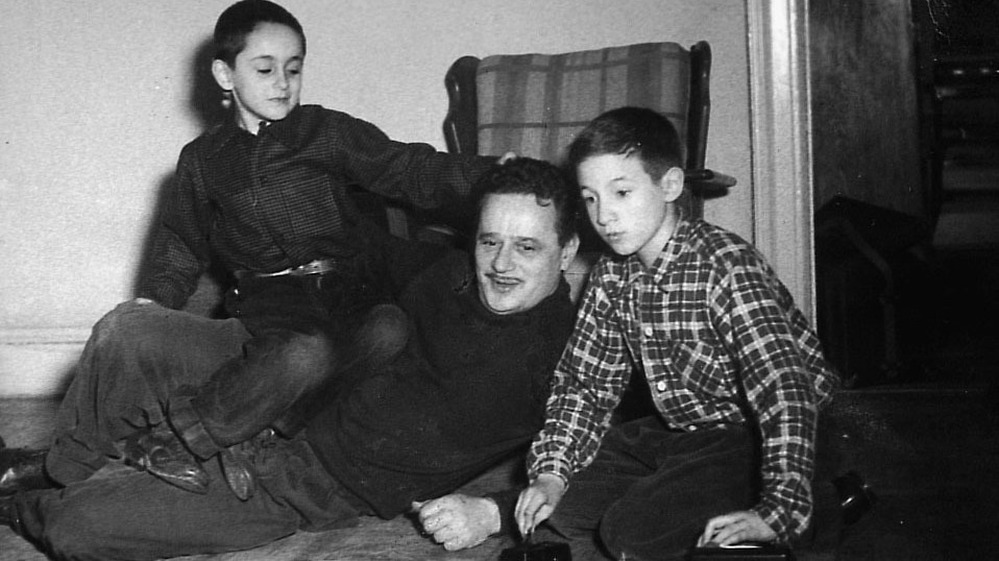
Abel Meeropol watches as his sons, Robert and Michael, play with a train set.

Courtesy of Robert and Michael Meeropol Abel Meeropol watches as his sons, Robert and Michael, play with a train set. Abel Meeropol watches as his sons, Robert and Michael, play with a train set.
Courtesy of Robert and Michael Meeropol

One of Billie Holiday's most iconic songs is "Strange Fruit," a haunting protest against the inhumanity of racism. Many people know that the man who wrote the song was inspired by a photograph of a lynching. But they might not realize that he's also tied to another watershed moment in America's history.

The man behind "Strange Fruit" is New York City's Abel Meeropol, and he really has two stories. They both begin at Dewitt Clinton High School, a public high school in the Bronx that has an astonishing number of famous people in its alumni. James Baldwin went there. So did Countee Cullen, Richard Rodgers, Burt Lancaster, Stan Lee, Neil Simon, Richard Avedon and Ralph Lauren.

Meeropol graduated from Dewitt Clinton in 1921; he went on to teach English there for 17 years. He was also a poet and a social activist, says Gerard Pelisson, who wrote a book about the school.

In the late 1930s, Pellison says, Meeropol "was very disturbed at the continuation of racism in America, and seeing a photograph of a lynching sort of put him over the edge."

Meeropol once said the photograph "haunted" him "for days." So he wrote a poem about it, which was then printed in a teachers union publication. An amateur composer, Meeropol also set his words to music. He played it for a New York club owner — who ultimately gave it to Billie Holiday.

When Holiday decided to sing "Strange Fruit," the song reached millions of people. While the lyrics never mention lynching, the metaphor is painfully clear:

Southern trees bear a strange fruit,
Blood on the leaves and blood at the root,
Black body swinging in the Southern breeze,
Strange fruit hanging from the poplar trees.

Pastoral scene of the gallant South,
The bulging eyes and the twisted mouth,
Scent of magnolia sweet and fresh,
And the sudden smell of burning flesh!

Here is a fruit for the crows to pluck,
For the rain to gather, for the wind to suck,
For the sun to rot, for a tree to drop,
Here is a strange and bitter crop.

In 1999, Time magazine named "Strange Fruit" the "song of the century." The Library of Congress put it in the National Recording Registry. It's been recorded dozens of times. Herbie Hancock and Marcus Miller did an instrumental version, with Miller evoking the poem on his mournful bass clarinet.

Miller says he was surprised to learn the song was written by a white Jewish guy from the Bronx. "Strange Fruit," he says, took extraordinary courage both for Meeropol to write and for Holiday to sing.

"The '60s hadn't happened yet," he says. "Things like that weren't talked about. They certainly weren't sung about."

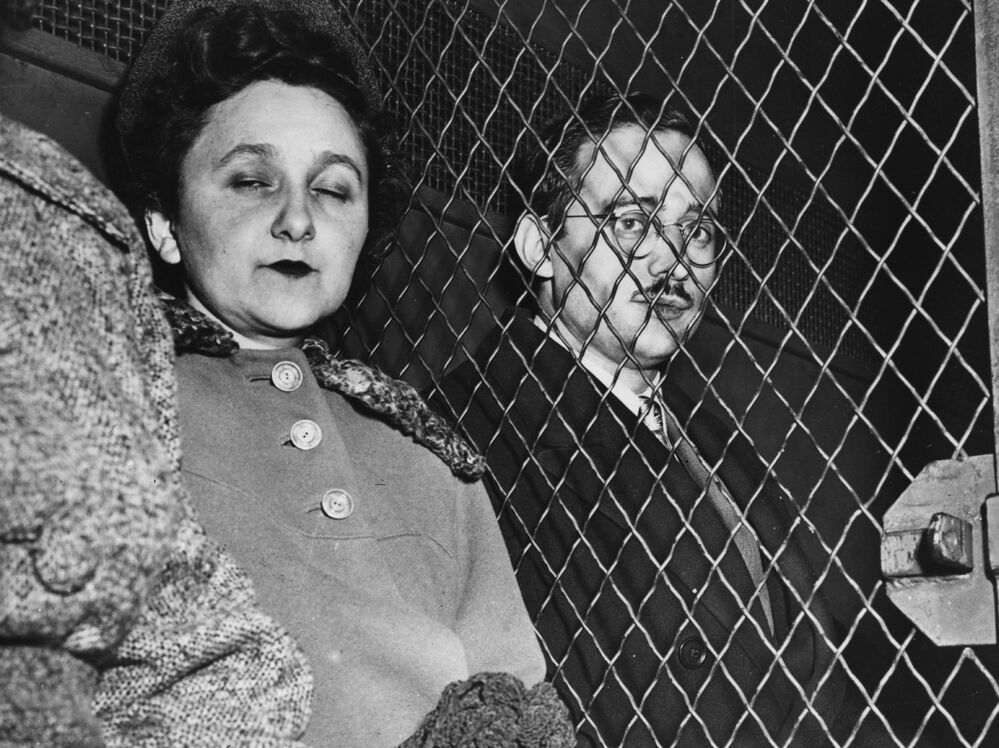
New York lawmakers didn't like "Strange Fruit." In 1940, Meeropol was called to testify before a committee investigating communism in public schools. They wanted to know whether the American Communist Party had paid him to write the song. They had not — but, like many New York teachers in his day, Meeropol was a Communist.

Journalist David Margolick, who wrote Strange Fruit: The Biography of a Song, says, "There are a million reasons to disparage communism now. But American Communism, one point it had in its favor was that it was concerned about civil rights very early."

Meeropol left his teaching job at Dewitt Clinton in 1945. He eventually quit the Communist Party.

And that's where the second part of Meeropol's story begins. The link is the pseudonym he used when writing poetry and music: Lewis Allan.

"Abel Meeropol's pen name 'Lewis Allan' were the names of their children who were stillborn, who never lived," says his son, Robert Meeropol. He and his older brother, Michael, were raised by Abel and his wife, Anne Meeropol, after the boys' parents — Ethel and Julius Rosenberg — were executed for espionage in 1953.

Julius and Ethel Rosenberg were sentenced to death for conspiring to give atomic secrets to the Soviet Union. The Rosenbergs had also been Communists.

Julius and Ethel Rosenberg are taken to prison after being found guilty of nuclear espionage. They were subsequently executed.

Keystone/Getty Images Julius and Ethel Rosenberg are taken to prison after being found guilty of nuclear espionage. They were subsequently executed. Julius and Ethel Rosenberg are taken to prison after being found guilty of nuclear espionage. They were subsequently executed.

Keystone/Getty Images

The couple's trial and execution made national headlines, and there was also something of a salacious element, given that the Rosenbergs were a married couple. News accounts described it as "the first husband and wife to die in the electric chair."

At the time, the Rosenberg sons, Robert and Michael, were 6 and 10, respectively. News photographs of the boys show them dressed in suits visiting their parents in prison.

"They're these little boys and they're wearing these caps, and they look so young and so vulnerable. It's really a very poignant image," says Margolick.

Robert Meeropol says that in the months following his parents' execution, it was unclear who would take care of him and his brother. It was the height of McCarthyism. Even family members were fearful of being in any way associated with the Rosenbergs or Communism.

Then, at a Christmas party at the home of W.E.B. Du Bois, the boys were introduced to Abel and Anne Meeropol. A few weeks later, they were living with them.

"One of the most remarkable things was how quickly we adapted," Robert says. "First of all, Abel, what I remember about him as a 6-year-old was that he was a real jokester. He liked to tell silly jokes and play word games, and he would put on these comedy shows that would leave me rolling."

There is something else about Abel Meeropol that seems to connect the man who wrote "Strange Fruit" to the man who created a loving family out of a national scandal. "He was incredibly softhearted," Robert says.

Anne Meeropol plays a song on guitar for her sons, Robert and Michael.

Courtesy of Robert and Michael Meeropol Anne Meeropol plays a song on guitar for her sons, Robert and Michael. Anne Meeropol plays a song on guitar for her sons, Robert and Michael.

Courtesy of Robert and Michael Meeropol

For example, there was an old Japanese maple tree in their backyard, which sent out many new seedlings every year.

"I was the official lawnmower," Robert says, "and I was going to mow over them, and he said, 'Oh, no, you can't kill the seedlings!' I said, 'What are you going to do with them, Dad? There are dozens of them.'

"Well, he dug them up and put them in coffee cans and lined them up along the side of the house. And there were hundreds of them. But he couldn't bring himself to just kill them. It was just something he couldn't do."

Abel Meeropol died in 1986. His sons, Robert and Michael, both became college professors. They're also both involved in social issues. Robert founded the Rosenberg Fund for Children. And he says that even after all these years, he still finds himself unable to kill things in his own garden.


View the original article here

The Strange Story Of The Man Behind 'Strange Fruit'

Abel Meeropol watches as his sons, Robert and Michael, play with a train set.

Courtesy of Robert and Michael Meeropol Abel Meeropol watches as his sons, Robert and Michael, play with a train set. Abel Meeropol watches as his sons, Robert and Michael, play with a train set.

Courtesy of Robert and Michael Meeropol

One of Billie Holiday's most iconic songs is "Strange Fruit," a haunting protest against the inhumanity of racism. Many people know that the man who wrote the song was inspired by a photograph of a lynching. But they might not realize that he's also tied to another watershed moment in America's history.

The man behind "Strange Fruit" is New York City's Abel Meeropol, and he really has two stories. They both begin at Dewitt Clinton High School, a public high school in the Bronx that has an astonishing number of famous people in its alumni. James Baldwin went there. So did Countee Cullen, Richard Rodgers, Burt Lancaster, Stan Lee, Neil Simon, Richard Avedon and Ralph Lauren.

Meeropol graduated from Dewitt Clinton in 1921; he went on to teach English there for 17 years. He was also a poet and a social activist, says Gerard Pelisson, who wrote a book about the school.

In the late 1930s, Pellison says, Meeropol "was very disturbed at the continuation of racism in America, and seeing a photograph of a lynching sort of put him over the edge."

Meeropol once said the photograph "haunted" him "for days." So he wrote a poem about it, which was then printed in a teachers union publication. An amateur composer, Meeropol also set his words to music. He played it for a New York club owner — who ultimately gave it to Billie Holiday.

When Holiday decided to sing "Strange Fruit," the song reached millions of people. While the lyrics never mention lynching, the metaphor is painfully clear:

Southern trees bear a strange fruit,
Blood on the leaves and blood at the root,
Black body swinging in the Southern breeze,
Strange fruit hanging from the poplar trees.

Pastoral scene of the gallant South,
The bulging eyes and the twisted mouth,
Scent of magnolia sweet and fresh,
And the sudden smell of burning flesh!

Here is a fruit for the crows to pluck,
For the rain to gather, for the wind to suck,
For the sun to rot, for a tree to drop,
Here is a strange and bitter crop.

In 1999, Time magazine named "Strange Fruit" the "song of the century." The Library of Congress put it in the National Recording Registry. It's been recorded dozens of times. Herbie Hancock and Marcus Miller did an instrumental version, with Miller evoking the poem on his mournful bass clarinet.

Miller says he was surprised to learn the song was written by a white Jewish guy from the Bronx. "Strange Fruit," he says, took extraordinary courage both for Meeropol to write and for Holiday to sing.

"The '60s hadn't happened yet," he says. "Things like that weren't talked about. They certainly weren't sung about."

New York lawmakers didn't like "Strange Fruit." In 1940, Meeropol was called to testify before a committee investigating communism in public schools. They wanted to know whether the American Communist Party had paid him to write the song. They had not — but, like many New York teachers in his day, Meeropol was a Communist.

Journalist David Margolick, who wrote Strange Fruit: The Biography of a Song, says, "There are a million reasons to disparage communism now. But American Communism, one point it had in its favor was that it was concerned about civil rights very early."

Meeropol left his teaching job at Dewitt Clinton in 1945. He eventually quit the Communist Party.

And that's where the second part of Meeropol's story begins. The link is the pseudonym he used when writing poetry and music: Lewis Allan.

"Abel Meeropol's pen name 'Lewis Allan' were the names of their children who were stillborn, who never lived," says his son, Robert Meeropol. He and his older brother, Michael, were raised by Abel and his wife, Anne Meeropol, after the boys' parents — Ethel and Julius Rosenberg — were executed for espionage in 1953.

Julius and Ethel Rosenberg were sentenced to death for conspiring to give atomic secrets to the Soviet Union. The Rosenbergs had also been Communists.

Julius and Ethel Rosenberg are taken to prison after being found guilty of nuclear espionage. They were subsequently executed.

Keystone/Getty Images Julius and Ethel Rosenberg are taken to prison after being found guilty of nuclear espionage. They were subsequently executed. Julius and Ethel Rosenberg are taken to prison after being found guilty of nuclear espionage. They were subsequently executed.

Keystone/Getty Images

The couple's trial and execution made national headlines, and there was also something of a salacious element, given that the Rosenbergs were a married couple. News accounts described it as "the first husband and wife to die in the electric chair."

At the time, the Rosenberg sons, Robert and Michael, were 6 and 10, respectively. News photographs of the boys show them dressed in suits visiting their parents in prison.

"They're these little boys and they're wearing these caps, and they look so young and so vulnerable. It's really a very poignant image," says Margolick.

Robert Meeropol says that in the months following his parents' execution, it was unclear who would take care of him and his brother. It was the height of McCarthyism. Even family members were fearful of being in any way associated with the Rosenbergs or Communism.

Then, at a Christmas party at the home of W.E.B. Du Bois, the boys were introduced to Abel and Anne Meeropol. A few weeks later, they were living with them.

"One of the most remarkable things was how quickly we adapted," Robert says. "First of all, Abel, what I remember about him as a 6-year-old was that he was a real jokester. He liked to tell silly jokes and play word games, and he would put on these comedy shows that would leave me rolling."

There is something else about Abel Meeropol that seems to connect the man who wrote "Strange Fruit" to the man who created a loving family out of a national scandal. "He was incredibly softhearted," Robert says.

Anne Meeropol plays a song on guitar for her sons, Robert and Michael.

Courtesy of Robert and Michael Meeropol Anne Meeropol plays a song on guitar for her sons, Robert and Michael. Anne Meeropol plays a song on guitar for her sons, Robert and Michael.

Courtesy of Robert and Michael Meeropol

For example, there was an old Japanese maple tree in their backyard, which sent out many new seedlings every year.

"I was the official lawnmower," Robert says, "and I was going to mow over them, and he said, 'Oh, no, you can't kill the seedlings!' I said, 'What are you going to do with them, Dad? There are dozens of them.'

"Well, he dug them up and put them in coffee cans and lined them up along the side of the house. And there were hundreds of them. But he couldn't bring himself to just kill them. It was just something he couldn't do."

Abel Meeropol died in 1986. His sons, Robert and Michael, both became college professors. They're also both involved in social issues. Robert founded the Rosenberg Fund for Children. And he says that even after all these years, he still finds himself unable to kill things in his own garden.


View the original article here